When we hear the words strength training, it’s easy to picture gyms, heavy weights and building muscle.
But after 50, strength training starts to mean something quite different.
It becomes less about how your body looks and much more about what you want your body to be able to do for you in 10, 20 or even 30 years’ time.
Getting out of a chair easily. Carrying your shopping. Climbing stairs. Playing with the grandchildren. Travelling. Gardening. Maintaining your balance. Living independently.
That’s what strength is really about.
We naturally lose muscle as we age
From midlife onwards, maintaining muscle becomes increasingly important. Age-related loss of muscle mass and strength can eventually affect mobility, balance and our ability to carry out everyday activities.
The encouraging part is that getting older doesn’t mean we simply have to accept becoming weaker.
Our muscles can still respond to resistance training as we age.
And you don’t have to become a bodybuilder to benefit.
Strength training might involve dumbbells, resistance bands, machines, body-weight exercises or other forms of resistance appropriate for your ability.
Consistency matters far more than trying to lift the heaviest weight in the room.
Your bones need strength training too
This is particularly important for women after menopause.
As estrogen levels decline, bone loss can accelerate. Over time, this can contribute to osteopenia and osteoporosis and increase the risk of fractures.
Bones respond to the demands we place on them, which is one reason resistance and weight-bearing exercise can be an important part of supporting bone health.
This subject is particularly close to my heart. Having my own bone density checked made me think much more seriously about what I could be doing now to protect my strength and independence later in life.
It changed the way I approached my own training.
Strength supports balance and independence
Strong muscles don’t operate in isolation.
They help us stand, move, stabilise our joints and recover when we’re knocked off balance.
Think about what independence actually requires.
Getting yourself off the floor.
Lifting a suitcase.
Carrying groceries.
Walking confidently.
Getting up from a low chair.
Doing jobs around the house.
These everyday activities require strength.
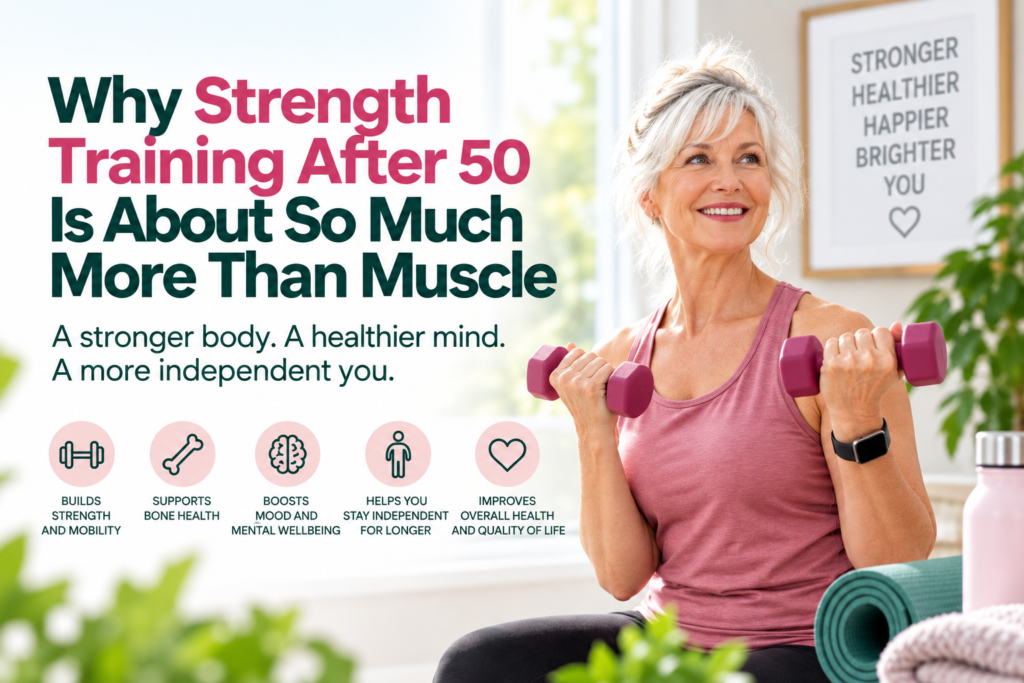
That’s why I believe strength training after 50 isn’t really about building a better body.
It’s about building a body capable of supporting the life you want to live.
There can be benefits beyond the physical
Regular exercise can also contribute to our overall wellbeing.
For many women, becoming stronger brings something else that’s difficult to measure: confidence.
There is something incredibly empowering about realising your body can do something today that it couldn’t do a few months ago.
Maybe you can lift a heavier weight.
Maybe stairs feel easier.
Maybe you can get down onto the floor and back up again.
Those little improvements matter.
You don’t need to train like you’re 25
One of the biggest mistakes we can make is thinking exercise only “counts” if it’s exhausting.
It doesn’t.
Training after 50 should take into account your current fitness, mobility, health and experience.
Start where you are.
Learn good technique.
Progress gradually.
Allow yourself to recover.
And choose activities you can realistically continue doing.
The goal isn’t to punish your body.
The goal is to invest in it.
Think about the 80-year-old version of you
Sometimes the easiest way to think about healthy ageing is to stop asking:
“What do I need to do to look younger?”
and start asking:
“What would I like my body to still be capable of when I’m 80?”
If you want to travel, walk, garden, play with grandchildren, live independently and continue saying yes to life, maintaining your strength deserves a place in your plans.
You don’t need perfection.
You don’t need hours in the gym.
You just need to keep giving your body a reason to stay strong.
Strong today. Independent tomorrow.
At Thrive After 50, healthy ageing isn’t about trying to turn back the clock. It’s about making practical choices today that give us the best possible chance of living well tomorrow.
And strength is one of the greatest investments we can make in our future selves.
Breathe. Move. Nourish. Connect. Thrive.